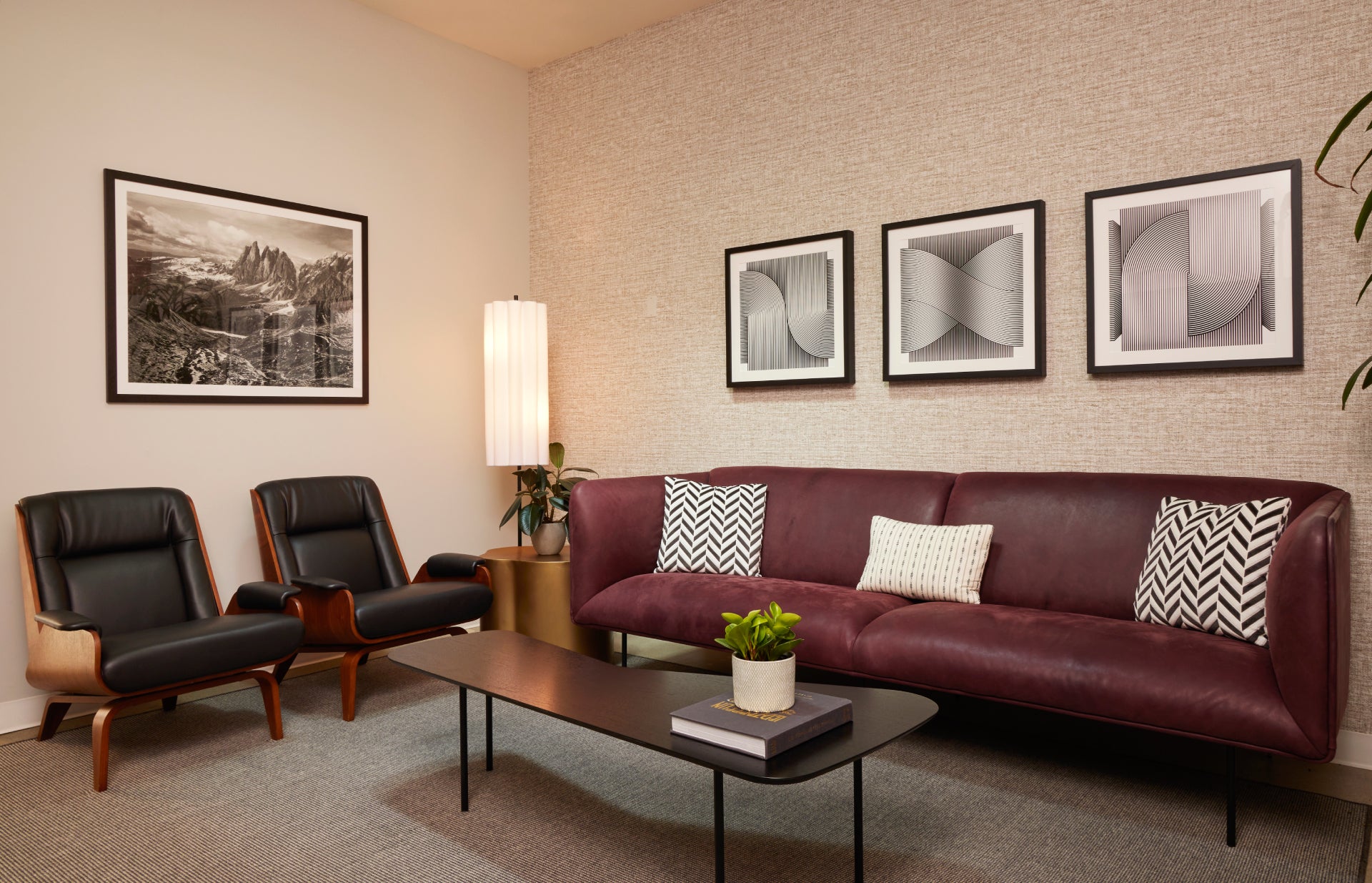
Office interior design in Los Angeles has changed more in the past five years than in the previous twenty. The combination of the remote work shift, a renewed competition for talent, and a commercial real estate market that rewards differentiation has produced an environment where the quality of a workplace is a genuine business asset — not a line item to be minimised, but a strategic investment in culture, productivity, and the ability to attract and retain the people who matter most.
We've designed offices, corporate suites, and creative studios across Los Angeles, and the pattern is consistent: the companies that invest in considered, well-designed workspaces outperform expectations in terms of team satisfaction, client impressions, and the day-to-day quality of work. The companies that treat their offices as a commodity tend to get commodity results.
Here's what we've learned about what makes office interior design in Los Angeles work — and what consistently doesn't.
Corporate Office Interior Design Los Angeles
Corporate office interior design in Los Angeles requires a different mindset from the hospitality or retail work that fills most design portfolios. The brief is functional above all else — the space needs to support focus, collaboration, client reception, and the daily operations of a real business — but the best corporate environments do all of that without feeling institutional. JAC Interiors works with businesses across Los Angeles County on corporate office projects ranging from executive suite renovations to full-floor fit-outs, always with the goal of designing a workspace that performs as well as it presents. If you're searching for a corporate office interior designer in Los Angeles, our commercial team is experienced across office typologies and business sectors.
Design for how your team actually works
The most common mistake in office interior design is designing for what an office looks like rather than for what it needs to do. An open plan that looks impressive in photographs but produces a acoustically chaotic, impossible-to-concentrate environment. Private offices that signal hierarchy but sit empty most of the day while teams cluster in conference rooms because there's nowhere else to collaborate. Reception areas that are designed to impress visitors but offer no value to the people who spend eight hours a day walking past them.
Good office design starts with a programming process: a genuine investigation of how the team works, what kinds of tasks they do, when they need concentration and when they need collaboration, how often they're on video calls, how clients or visitors move through the space, and what the space needs to communicate about the organisation's values and culture. The design follows from the answers to those questions — not from a predetermined aesthetic applied to the floor plan.
In Los Angeles specifically, this often means designing for hybrid work patterns, because most LA-based companies are managing a team that's in the office some days and remote others. The office needs to be worth the commute — which in LA means it needs to offer something that working from home genuinely can't: better collaboration, better equipment, a stronger sense of the team, and a physical environment that's more conducive to the kind of work that benefits from presence.
Private focus space is the most under-provided resource in modern offices
Open plan offices swept through corporate America on the premise that collaboration is the highest-value activity at work, and therefore the office should be optimised for it. The premise was partly right but mostly overstated. Collaboration is important. So is individual focus work — and for many roles, focus work is where most of the value is actually created.
The practical consequence is that most open plan offices are badly undersupplied with private or semi-private spaces where people can do focused work without distraction. Phone booths, focus rooms, and quiet zones have become standard correctives in commercial design for exactly this reason — they restore the balance that pure open plan removes.
In our office projects across Los Angeles, we typically design with a mix: open or semi-open collaboration areas for team work and spontaneous interaction; small enclosed rooms for calls, video meetings, and heads-down individual work; a few larger conference rooms for structured meetings; and informal areas — a lounge, a kitchen-adjacent seating area, a breakout space — where conversations happen that don't fit neatly into any scheduled meeting.
JAMM
Biophilic design in LA workplaces
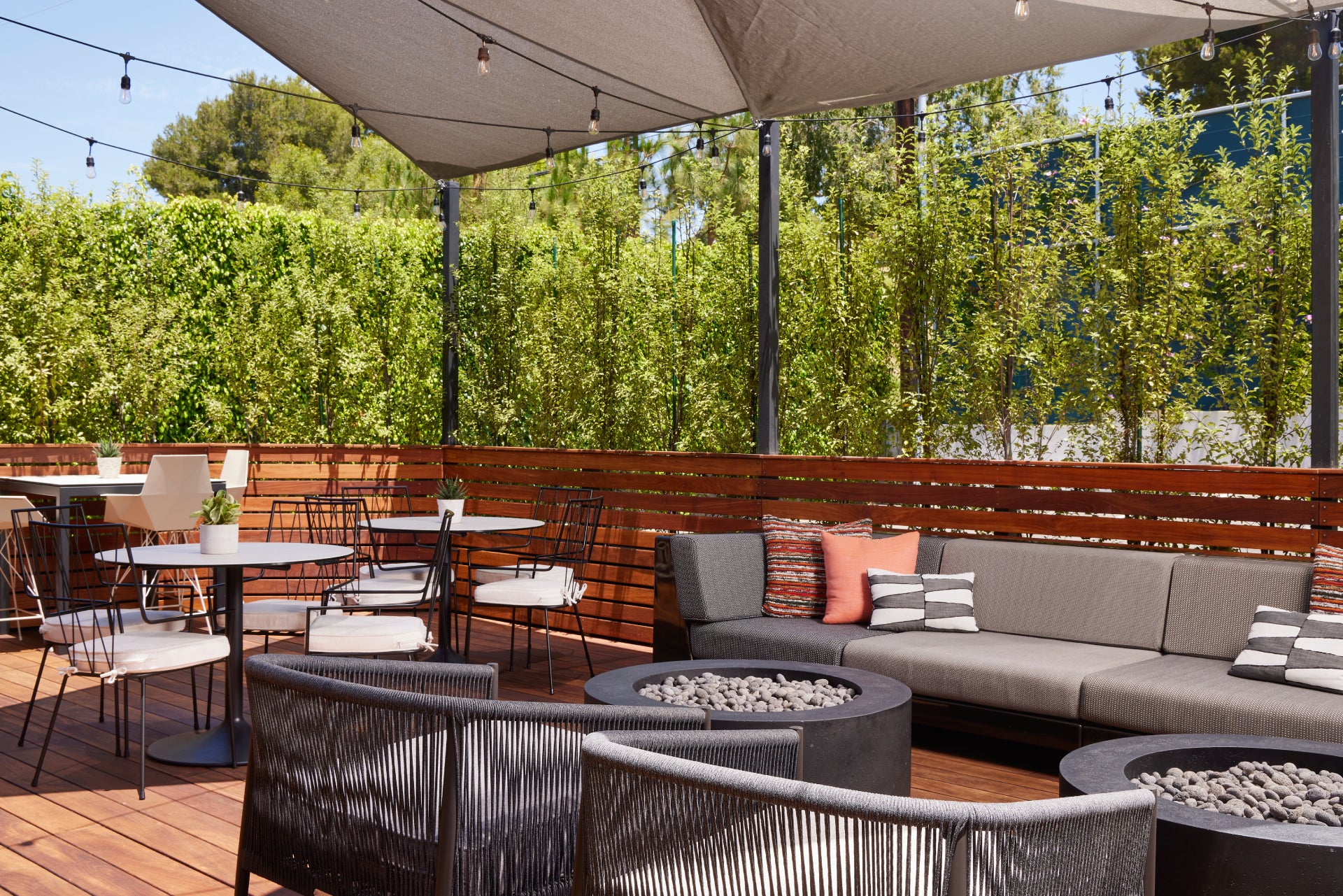
Los Angeles has a natural advantage that most commercial interior designers should use more aggressively: the relationship between indoor and outdoor space. The climate allows for it in a way that Chicago or New York simply doesn't, and the research on biophilic design — the incorporation of natural elements, natural light, and connections to the outdoors into interior spaces — consistently shows productivity and wellbeing benefits that translate directly to workplace performance.
In practical terms, biophilic design in an LA office might mean maximising the use of natural light rather than compensating for its absence with artificial lighting; incorporating living plant installations — maintained properly, not the sad corner ficus — as acoustic and visual elements; using natural materials like wood, stone, and linen rather than synthetic alternatives; and where the building configuration allows, creating indoor-outdoor connections through operable walls, terraces, or outdoor meeting areas that are actually usable for most of the year.
The effect on the feel of the space is significant. An office that's well-lit with natural light, has visible greenery, and uses materials with natural warmth and texture feels fundamentally different from one that doesn't — less institutional, more human, more like somewhere you'd choose to spend time rather than somewhere you're obligated to be.
Creative studios: a different kind of commercial project
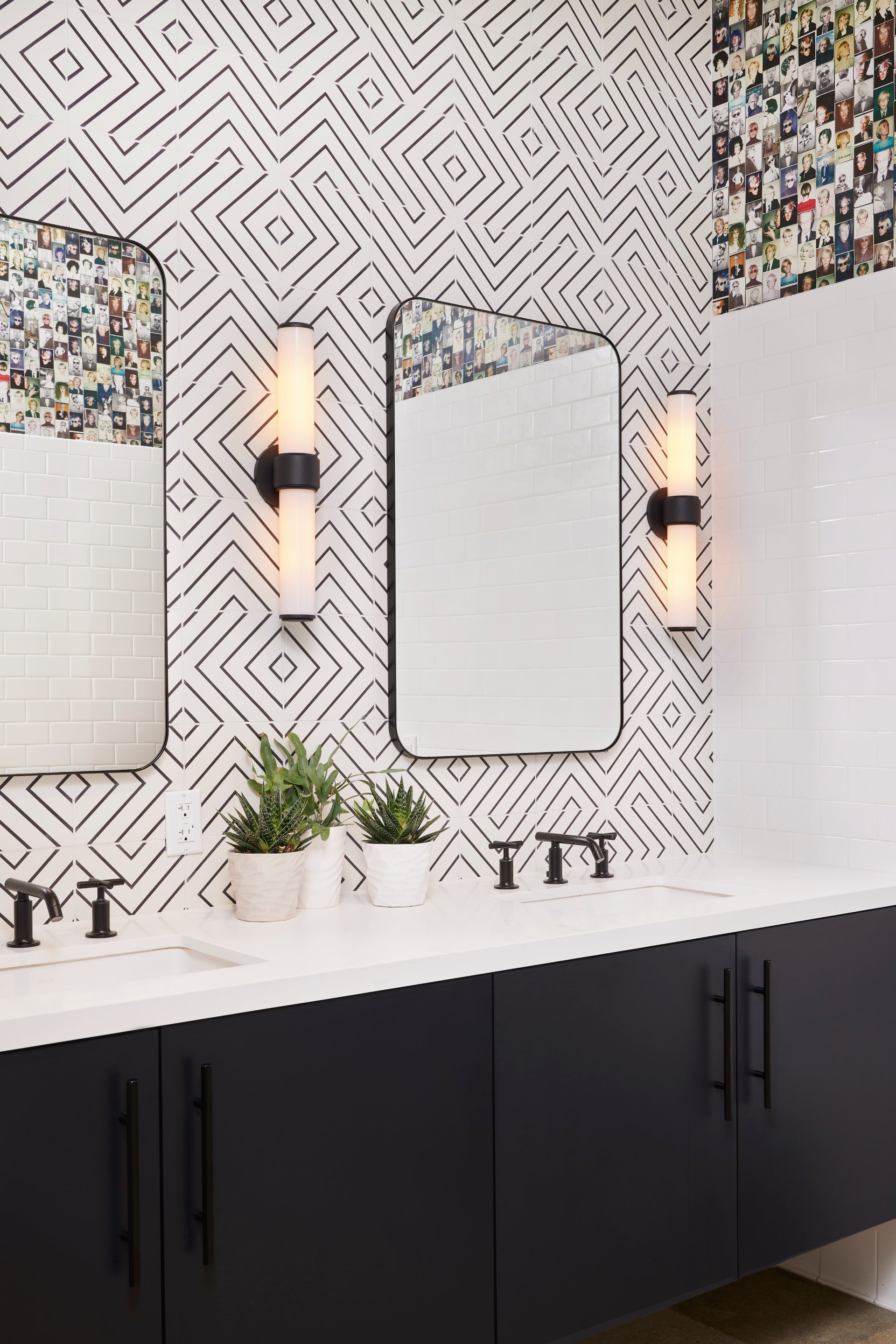
Creative studios — production companies, design agencies, music studios, architecture practices — present a specific set of design challenges and opportunities that differ from conventional corporate office work. The work itself tends to be visible and in-progress, which means the studio environment needs to accommodate materials, references, work-in-progress displays, and the organised chaos that creative production involves. At the same time, these companies often use their studio as a client-facing environment, which means it needs to communicate the quality and character of their work.
The best creative studio interiors we've worked on solve this tension by being genuinely true to the company's work. A design agency whose portfolio is defined by bold materiality should have an office that reflects that — not a generic open plan that could belong to any company. A production company that works across multiple media needs a studio that accommodates that range, with different zones for different kinds of work, all tied together by a consistent material and visual language.
Storage and display are particularly important in creative environments. There's almost always more material in the space than a conventional office would hold — samples, references, prototypes, equipment — and the difference between a creative studio that feels energised and one that feels overwhelmed is largely a function of how well the storage has been designed. Built-in storage that's been conceived as part of the interior rather than added as an afterthought, combined with display opportunities for work and references, keeps the space functional and visually coherent.
JAMM
The client experience: reception and client-facing areas
For companies that receive clients in their office, the entry experience — from the moment a visitor enters the building to the moment they sit down in a meeting — is a significant piece of business communication. It sets expectations, signals values, and tells the client something about who they're dealing with before a word has been exchanged. Most companies underinvest in this sequence, treating reception as a pass-through rather than a designed experience.
In a well-designed LA office, the reception area establishes the visual and material language of the whole space. The furniture is considered and appropriate in scale. The materials — the stone on the reception desk, the finish on the walls, the quality of the lighting — communicate the same level of care and attention that the company brings to its actual work. There's probably art, and it says something specific about the company's perspective rather than being generic and safe.
The conference rooms that clients use are similarly important. Furniture that's the right scale for the room, lighting that makes everyone look good on video calls, acoustic treatment so conversations feel private, and technology that actually works reliably — these are the fundamentals. A conference room that makes clients feel comfortable and respected is one of the most cost-effective client relationship investments a company can make.
Material and finish selections for commercial spaces
Commercial interior design requires a different approach to material selection than residential work. Durability is a much higher priority — surfaces that look beautiful on day one but show wear by month six are not a successful design. At the same time, the commercial instinct to default to institutional-grade finishes because they're easy to maintain produces offices that feel exactly as institutional as the materials suggest.
The goal is durability that doesn't read as durable — materials that are genuinely robust and easy to maintain but feel warm and considered rather than commercial. In practice: luxury vinyl tile in wood-look finishes that can withstand rolling chairs without showing it; upholstered seating in performance fabrics that clean easily; hard surfaces in stone or stone-look materials that are both beautiful and impervious; millwork that's built to commercial tolerances rather than residential ones, which are not designed for the wear levels of a busy office.
Acoustic performance is another material consideration that's often neglected until it's too late. Hard surfaces reflect sound; soft surfaces absorb it. An open plan office with polished concrete floors, glass partitions, and minimal soft goods will be acoustically brutal. Rugs, acoustic panels integrated into the ceiling or walls, upholstered furniture, and soft goods in the right locations can transform the acoustic character of a space without making it feel like a recording studio.
If you're planning an office fit-out or commercial design project in Los Angeles, we'd be glad to talk through what your space needs — and what a design process that takes your team's actual work seriously looks like in practice. Learn more about our commercial interior design services.


